



With the rapid development of space and astronomical optics, the demand for large-aperture aspheric mirrors continues to climb. In the field of super-precision optical component grinding and polishing, active lap (stressed lap) technology, as a controllable flexible processing technology, has become a key solution to breakthrough the manufacturing difficulties of large-aperture optics due to its high material removal rate and excellent mid-to-high frequency error suppression capabilities. However, ensuring the deformation accuracy of the active lap is a necessary prerequisite for achieving ultimate machining precision.
1. Core Principles and Technical Advantages of Active Laps
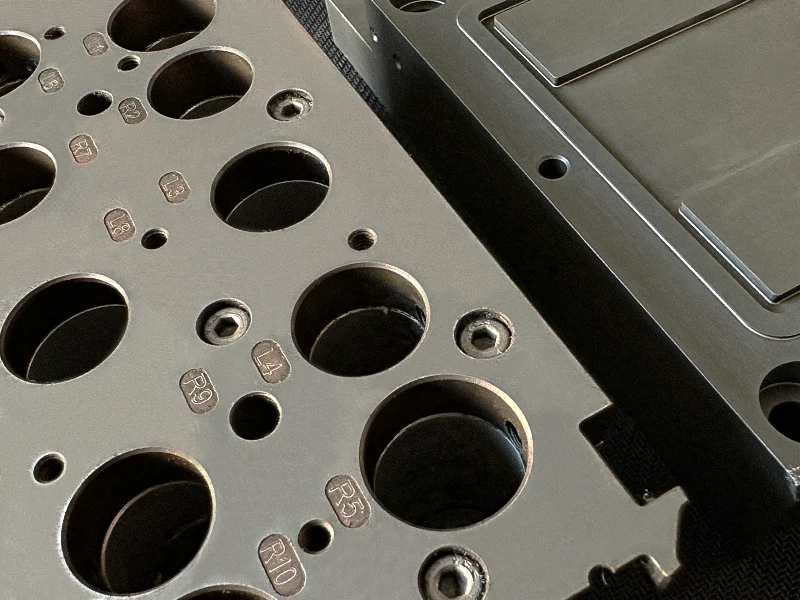
The hardware structure of an active lap mainly consists of four core parts: the grinding plate, the deformation drive device, the weight reduction system, and the control system. Through the combination of closed-loop force control and variable/zero-pressure grinding modes, the system can effectively improve processing efficiency or reduce sub-surface damage.
Its core working principle relies on active deformation technology. Through computer control, the lap generates an off-axis aspheric surface that continuously matches the theoretical surface in real-time during the dynamic grinding and polishing process. This technology has three significant advantages:
The removal function and trajectory are fully controllable, ensuring highly deterministic processing.
The lap surface always matches the ideal surface of the workpiece, effectively suppressing mid-to-high frequency surface errors.Large processing aperture and large material removal spot size, achieving high efficiency and rapid surface convergence.

2. Multi-Source Coupling Characteristics of Static Deformation Errors
In actual working conditions, the static deformation errors of active laps exhibit complex multi-source coupling characteristics. Based on their generation stages, they can be categorized into four types with distinct mathematical properties:
Calculation Errors: Caused by the truncation of the generalized inverse matrix during driving force calculation, usually tending towards a constant offset.
Modeling Errors: Originating from the difference between the influence function (IF) and actual effects, exhibiting linear characteristics.
Execution Errors: A quadratic deviation effect caused by the nonlinear influence of sensors on motor driving forces.Structural Errors: Caused by stress concentration effects at central holes and edge sections, directly related to stress distribution

3. Innovative Solution: Partitioned Error Prediction Model
To overcome the limitations of traditional methods that only correct a single error source, this study proposes a static deformation error compensation method based on surface feature point displacement prediction.
Based on the distribution of sampling points and stress characteristics, this method divides the lap surface into four annular zones, categorizing them into primary deformation zones (high stress concentration) and low deformation zones (low stress concentration). Differentiated fitting strategies are applied according to the error evolution patterns of different regions:
Primary Deformation Zones: A quadratic polynomial model based on zero-position constraints is used to accurately fit the local deformation errors of feature points.Low Deformation Zones (e.g., the 3rd ring): Since this area is least affected by stress concentration and the average error size is close to the probe’s resolution limit, its evolution is highly unstable. Therefore, a constant model is used in this region, taking the average value of the prediction set as the final predicted value to prevent over-compensation caused by forced fitting.

4. Processing Effect Verification and Future Prospects
Verification results on a 530mm active lap (simulating a 2m, F/1.7 parabolic mirror processing environment) show that the surface residual is significantly reduced after applying this partitioned compensation method. The RMS of the static deformation surface residual of the active lap is stably controlled within 1 micrometer (1um), fully proving the engineering efficiency and universality of this method.
In the future, research on active lap technology will advance towards real-time error compensation under dynamic working conditions. It is expected to integrate emerging tools such as machine learning and intelligent control to enhance the algorithm’s adaptability, providing solid support for the ultra-precision manufacturing of larger apertures and more complex freeform surfaces.
