
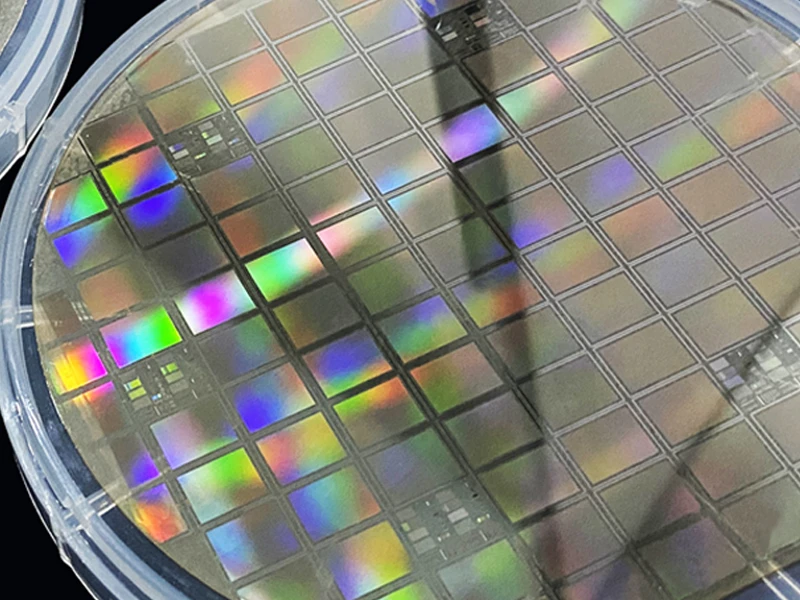



In short, SiC metallization refers to the process of depositing single or multi-layer metal thin films onto patterned SiC wafers (after etching, ion implantation, and other front-end processes) via physical or chemical methods, followed by thermal annealing to form low-resistivity ohmic contacts or functional Schottky contacts.
Its core purpose is to fabricate stable and reliable electrodes for SiC power devices (such as MOSFETs, SBDs, JFETs, etc.) that can withstand high temperatures, high currents, and high power densities.
Why SiC Metallization Is Critical and Challenging
Compared with conventional silicon (Si), the intrinsic material properties of SiC impose far more stringent requirements on metallization:
- High work function and heavy doping requirementsSiC has high electron affinity, and n-type SiC exhibits an extremely high work function. To achieve high-quality ohmic contacts with a contact resistivity ρc<10−5Ω⋅cm2, metals with matched work functions or extremely high surface doping concentrations are required to lower the Schottky barrier.
- High-temperature stabilitySiC devices can operate at junction temperatures above 200°C, with target values up to 250°C. The metallization system must remain stable under long-term high-temperature operation without severe interdiffusion, phase transformation, or degradation, which would otherwise increase contact resistance or cause device failure.
- High power density capabilitySiC devices feature high switching frequencies and large current densities. Metallization layers must provide excellent electrical conductivity and electromigration resistance to withstand high-current stress and prevent interconnect failure.
- Back-end process compatibilityMetallization layers must be compatible with subsequent packaging processes such as soldering and wire bonding, with strong adhesion and good solderability.
Brief Introduction to the Metallization Process Flow
A typical back-end metallization sequence includes:
- Surface pretreatmentBefore metal deposition, the SiC wafer surface undergoes rigorous cleaning (e.g., RCA cleaning) and surface oxide etching (typically dilute HF solution) to remove native oxides and contaminants. This step is critical for achieving low contact resistivity.
- Metal deposition
- E-beam evaporation: High purity and high energy, suitable for laboratories and R&D.
- Magnetron sputtering: The mainstream industrial method, offering excellent thin-film uniformity, strong adhesion, and high throughput.
- Photolithography and lift-off / etchingElectrode patterns are defined by photolithography.
- Lift-off process: Photoresist is patterned first, followed by metal deposition; solvent then removes the resist and unwanted overlying metal.
- Dry / wet etching: A full metal layer is deposited first, then patterned with photoresist; unwanted metal is removed by chemical or plasma etching.
- AnnealingPrimarily used to form ohmic contacts. Rapid thermal annealing (RTA) is applied with precise control of temperature and time (e.g., 1000°C for 2 minutes).
- Top-level metal interconnectsA thick metal layer (e.g., Al/TiW/Cu) is deposited on the formed contact vias as interconnections to reduce overall series resistance.
Technical Challenges in SiC Metallization
Metallization of SiC devices faces several key challenges:
- Formation of high-quality ohmic contacts to SiC
- Excellent stability in high-temperature operating environments
- Superior electrical and thermal conductivity
- Compliance with high-reliability and long-lifetime requirements