
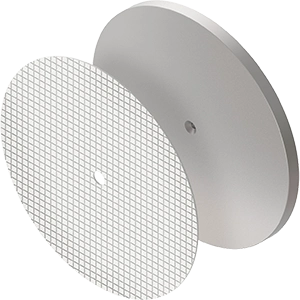




Flat polishing processes can be divided into two categories: Mechanical Polishing and Chemical-Mechanical Polishing.
Mechanical Polishing
Mechanical polishing is essentially a ultra-fine flat lapping method. When the hardness of the workpiece exceeds HRA 85, polishing takes up a minimal amount of time. This is because during the lapping process, the hardness of the workpiece material can counteract the abrasive force of the lapping particles, resulting in a surface finish comparable to that achieved by polishing.
For example, using a soft pad and ultra-fine abrasive slurry to grind tungsten carbide and alumina ceramics can directly produce a mirror-like finish with very high flatness. If any lapping marks are present on the surface after lapping, a very short period of CMP (around one minute) is sufficient to remove them.
Chemical-Mechanical Polishing
CMP polishing slurries are classified based on their pH value as acidic or alkaline.
At a microscopic level, acidic and alkaline slurries slowly etch and soften the surface of the workpiece during processing, converting it into a thin film composed of countless extremely fine, soft particles. Therefore, abrasives can easily remove the ionized particulate matter and leave a scratch-free surface with very high-resolution roughness.
On the other hand, neutral slurries are less commonly used in processing but can be considered based on the antioxidant requirements of the product.
| Base Material | Diameter (mm) | Synthetic | Formation | Usage |
|---|---|---|---|---|
| Alkali Soluble Resin | ≤ 1270 | Yes | AOB | Chemical Mechanical Polishing |
| Bitumen | ≤ 2000 | No | ||
| Cotton | ≤ 2000 | No | ||
| Nubuck | ≤ 1270 | No | ||
| Nylon | ≤ 1270 | No | ||
| Polyethylene | ≤ 1270 | Yes | ||
| Polyurethane | ≤ 1270 | Yes | ||
| Silk | ≤ 2000 | No | ||
| SUPA | ≤ 910 | No | ||
| Velvet | ≤ 2000 | No | ||
| Wool | ≤ 2000 | No |
| BASE MATERIAL | STRUCTURE | pH Tendency | Volume (ml/bottle) |
|---|---|---|---|
| Alumina (Al2O3) | Sharp, Angular, Blocky | Acidic · Alkaline | 500 · 1000 · 4000 · 10000 |
| Cerium Dioxide (CeO2) | Sharp, Blocky, Solid | Alkaline | |
| Manganese Dioxide (MnO2) | Colloidal | Acidic · Alkaline | |
| Silicon Dioxide (SiO2) | Colloidal | Acidic · Alkaline | |
| Zirconium Dioxide (ZrO2) | Colloidal | Acidic · Alkaline |
We use cookies to enhance your experience on our website. By continuing to browse this site, you consent to our use of cookies. For more information, please review our Cookie Policy.