



1. Process Background and Core Challenges
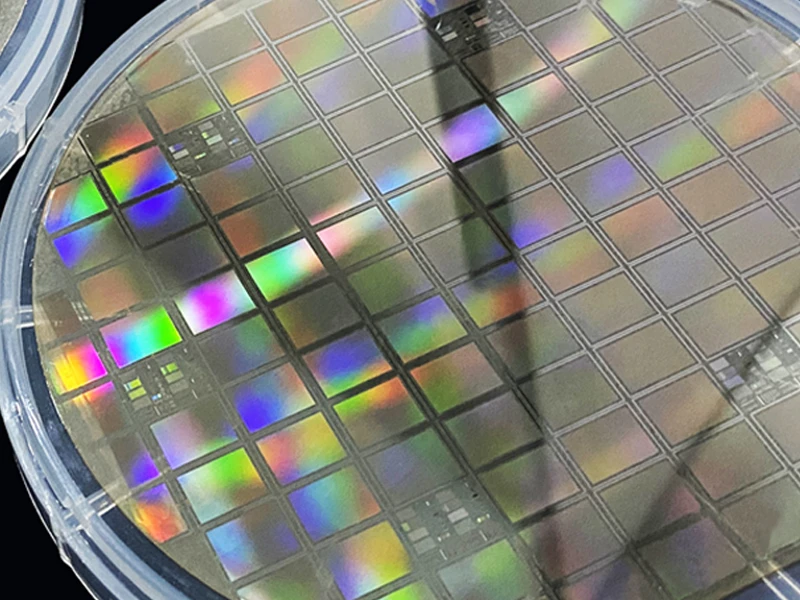
In the chemical mechanical planarization (CMP) fine polishing process for semiconductor silicon wafers, continuous friction between the polishing pad and the wafer inevitably generates localized heat, leading to significant and non-uniform variations in the interfacial temperature field. These temperature fluctuations directly affect the chemical reactivity of the slurry, which in turn causes non-uniform distribution of material removal rates (MRR) across the wafer surface.Conventional CMP modeling approaches have long overlooked the coupling relationship between the thermal field and the mechanical field, describing material removal behavior from a purely mechanical perspective. This limitation results in insufficient model prediction accuracy and an inability to effectively guide practical process optimization — a shortcoming that becomes especially critical in ultra-precision polishing scenarios where uniformity requirements are extremely stringent.
2. Construction of the Thermo-Mechanical Coupled Numerical Model
To address these challenges, researchers developed a numerical simulation model that simultaneously couples the thermal field and the mechanical field, systematically analyzing the frictional heat generation mechanism at the pad-wafer interface.
The model incorporates three core dimensions:
First, accurate characterization of polishing pressure distribution. The model spatially maps the pressure applied by the polishing head onto the wafer surface, capturing the pressure differential between edge effects and the central region, thereby providing the mechanical foundation for subsequent MRR calculations.
Second, computation of the relative velocity field. The relative motion velocity between the polishing pad and the wafer exhibits gradient variations at different radial positions. The model provides a refined representation of the global velocity field, enabling accurate spatial quantification of frictional heat generation.
Third, incorporation of hydrodynamic lubrication effects. The polishing slurry forms a fluid film at the interface, generating hydrodynamic lubrication effects that influence the actual contact pressure and heat conduction pathways. By integrating this effect into the coupled calculation, the simulation results more closely reflect the real machining state.
3. Spatial Distribution Prediction of Material Removal Rate
Based on the thermo-mechanical coupled model, researchers achieved two-dimensional spatial prediction of MRR distribution across the wafer surface. The incorporation of the temperature field enables the model to dynamically reflect how the chemical reaction rate of the slurry varies with local temperature, thereby organically combining chemical removal contributions with mechanical removal contributions to form a more complete description of the removal mechanism.
The model’s prediction results showed good agreement with experimental measurement data, validating the effectiveness and reliability of the thermo-mechanical coupled modeling approach in fine polishing process analysis.
4. Application Value for Process Optimization
The engineering significance of this model lies in providing a quantifiable theoretical basis for CMP process parameter optimization. Process engineers can use model simulation to predict, prior to experimentation, how different combinations of pressure, rotational speed, and temperature control strategies will affect removal uniformity — thereby significantly shortening the process development cycle and reducing experimental costs.
Achieving predictable control of removal uniformity represents the most fundamental contribution of this technology to the field of semiconductor ultra-precision machining, with direct practical implications for improving wafer yield and ensuring device performance.