
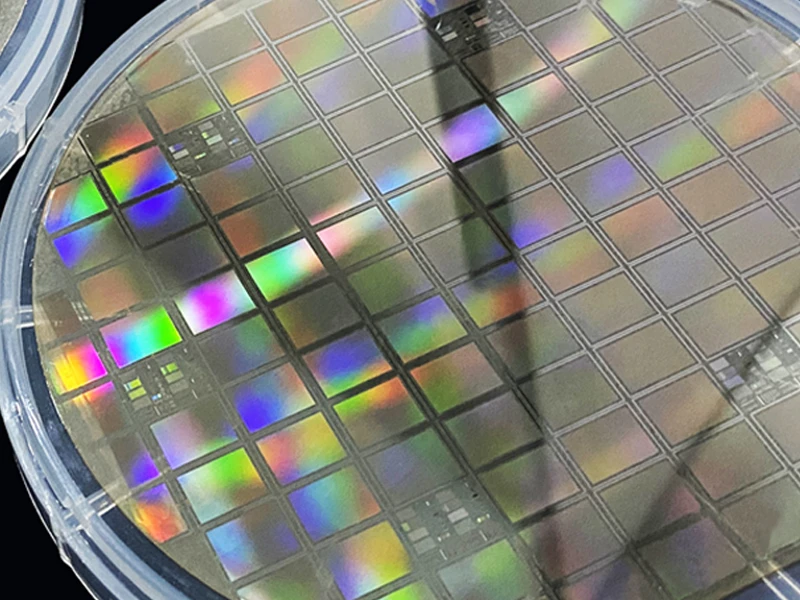



Research Background: Challenges and Opportunities in Silicon Photonics Integration Silicon Photonic Integrated Circuits (PICs) offer significant advantages, including high bandwidth, high speed, low power consumption, and CMOS process compatibility, showing massive potential in telecommunications, computing, sensing, and imaging. The core objective is the monolithic integration of functional components like optical waveguides, modulators, and detectors. However, due to the physical limitations of silicon materials, the direct wafer-scale integration of semiconductor optical amplifiers and lasers remains a massive technical challenge.
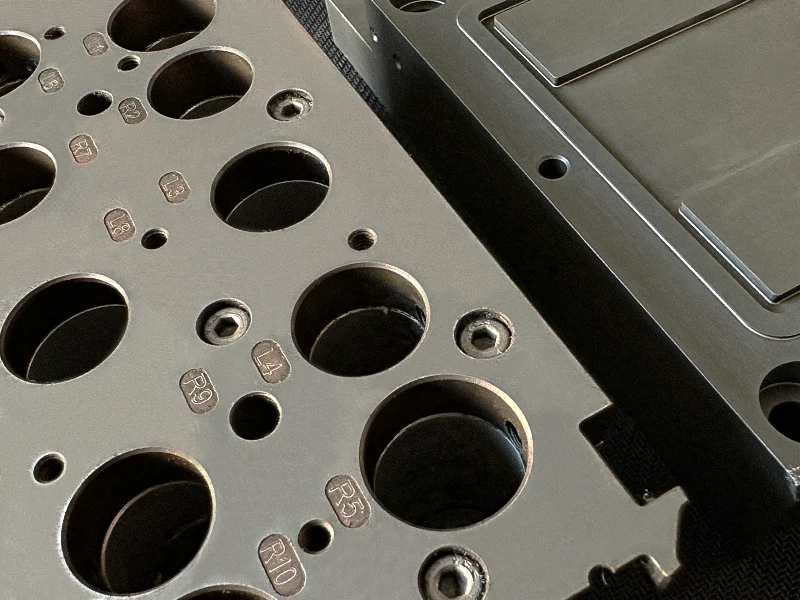
Although the industry has attempted traditional solutions such as active alignment, flip-chip bonding, heterogeneous epitaxial growth, and wafer bonding, these technologies face inherent limitations regarding Known Good Die (KGD) screening and manufacturing costs. Against this backdrop, Micro-transfer Printing (μTP) has emerged as a novel wafer-scale, large-scale heterogeneous integration scheme. It enables the highly efficient integration of diverse optoelectronic components—such as lasers, modulators, and detectors—dramatically boosting production efficiency and driving down costs.Core Principles and Process Flow of Micro-Transfer Printing Micro-transfer printing is a method that utilizes an elastomeric stamp with surface adhesion (typically using PDMS, polydimethylsiloxane, as the support layer) to achieve arrayed batch pick-up, parallel transfer, and precise release of target chips. PDMS material is not only highly flexible but also transparent, which facilitates real-time monitoring and alignment, significantly enhancing process stability.

1.The complete process flow includes:
Device Preparation and Isolation: Optoelectronic devices are fabricated on a source substrate using standard processes. A sacrificial layer is then etched to detach the chips from the substrate.
High-Speed Pick-up: A PDMS stamp with specific raised structures is pressed onto the devices, followed by a rapid retraction of the stamp. This high-speed operation increases the adhesion between the stamp and the device, ensuring reliable chip pick-up.Precise Drop-off (Release): The devices on the stamp are accurately aligned with the target substrate and brought into slow contact. The release process relies on the slow retraction of the stamp to reduce the adhesion force between the stamp and the device, ultimately completing the transfer.

2.Three Core Assisted Transfer Technologies To address the transfer requirements of different materials and devices, the industry has developed three primary assisted transfer modalities:
Adhesion-Assisted Transfer The success of micro-transfer printing highly depends on adhesion control. By precisely controlling the transfer speed, optimizing stamp geometry, introducing BCB organic polymer materials, and utilizing anisotropic wet etching techniques, adhesion can be effectively modulated, significantly improving μTP efficiency and yield.
2D Material-Assisted Transfer Conventional metal deposition processes can introduce high resistance at the contact interface, and strongly adhesive metals (such as Pt, Ti, Ni) bond extremely tightly to substrates with surface dangling bonds, making them exceptionally difficult to peel off. By introducing 2D materials without surface dangling bonds (such as graphene and hexagonal boron nitride), this peeling difficulty is perfectly resolved. This not only lowers the transfer difficulty but also drastically improves the structural integrity and contact performance of the transferred targets.Laser-Assisted Non-Contact Transfer For extremely fragile devices, conventional contact-based release may cause physical damage. Laser-assisted non-contact transfer utilizes localized laser heating to precisely control the stamp’s viscosity changes. This allows the release to be completed without applying mechanical force to overcome adhesion, providing an excellent solution for the heterogeneous integration of fragile components.

3.Commercialization Prospects and Future Outlook Micro-transfer printing has demonstrated irreplaceable advantages in the heterogeneous integration of multi-functional photonic devices (e.g., co-integrating lithium niobate modulators and germanium detectors on a single silicon chip), making it crucial for realizing the functional reconfiguration of optical computing, optical interconnects, and optical sensing.
To drive micro-transfer printing toward a mature commercial model, the following areas must be prioritized:
Yield Assurance and Parameter Optimization: It is imperative to ensure that the devices on the source wafer are Known Good Dies (KGD). Furthermore, the velocity ranges of the van der Waals forces required during the pick-up and release processes must be carefully modulated, ensuring in-plane uniformity. Discovering universal transfer parameters applicable to multi-material integration is central to accelerating commercialization.
Supply Chain and Standardization Development: A complete production chain encompassing source wafer suppliers, μTP foundry lines, and target wafer suppliers must be established. Additionally, interface and testing standardization is mandatory. This includes standardizing the optical and electrical interfaces between silicon photonic chips and chiplets, standardizing chip dimensions and array layouts, and standardizing process control test structures.
