



Two Materials With Nearly the Same Chemistry
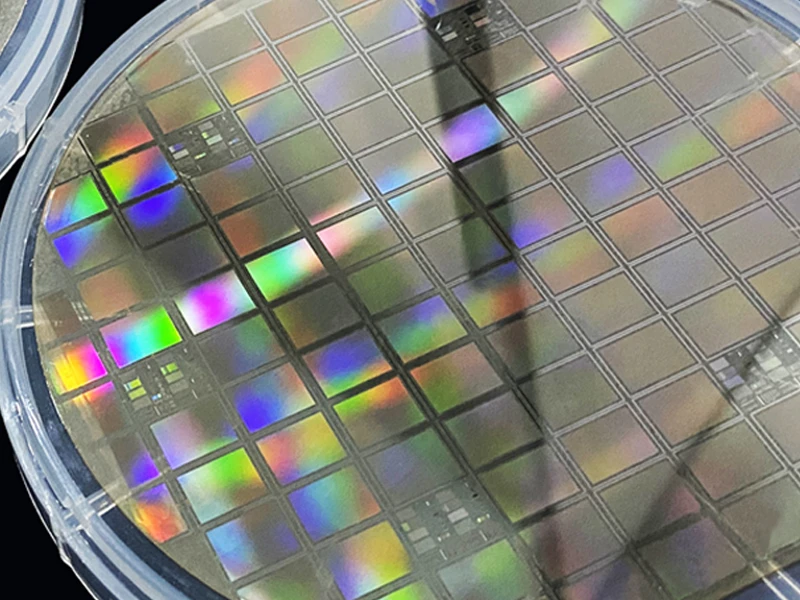
A high electron mobility transistor is built on a gallium nitride channel capped by an aluminium gallium nitride barrier only twenty nanometres thick, and the finishing step must remove material from the barrier without penetrating it, because even a few nanometres of thinning shifts the threshold voltage of the device.
Selectivity Between AlGaN and GaN Is Poor
The two materials share the same crystal family and differ only in aluminium content, so most slurries attack both at almost the same rate and the process has no natural endpoint. The polishing therefore has to stop on a time basis, which is not accurate enough for a twenty nanometre barrier.
Tuning the Chemistry to the Aluminium Content
Slurries were formulated with oxidants and complexing agents chosen for their different affinity to aluminium and gallium sites, and the removal rates of gallium nitride, aluminium nitride and two barrier compositions were measured separately so that the selectivity ratio could be mapped against the formulation. The polishing was performed on a Ponda CMP platform, with the slurry delivery and the pad conditioning established by the process specialists at Ponda, a precision machining and finishing company.
Aluminium Oxide Is the Lever
The measurements show that the aluminium fraction governs the selectivity because the oxide that forms on aluminium rich surfaces is more stable and dissolves more slowly, so a chemistry that stabilises that oxide protects the barrier while the gallium nitride beneath continues to be removed. The selectivity therefore rises with the aluminium content in a predictable way.
Selectivity Ratio Raised Above Twenty
The optimised slurry gave a barrier to channel selectivity of 22 to 1, compared with 1.6 to 1 for a conventional silica slurry, and the barrier thickness after polishing was uniform to within 0.8 nanometres across a 50 millimetre wafer. Root mean square roughness reached 0.16 nanometre with no pit formation.