



Thickness Variation Decides Whether Stacking Works
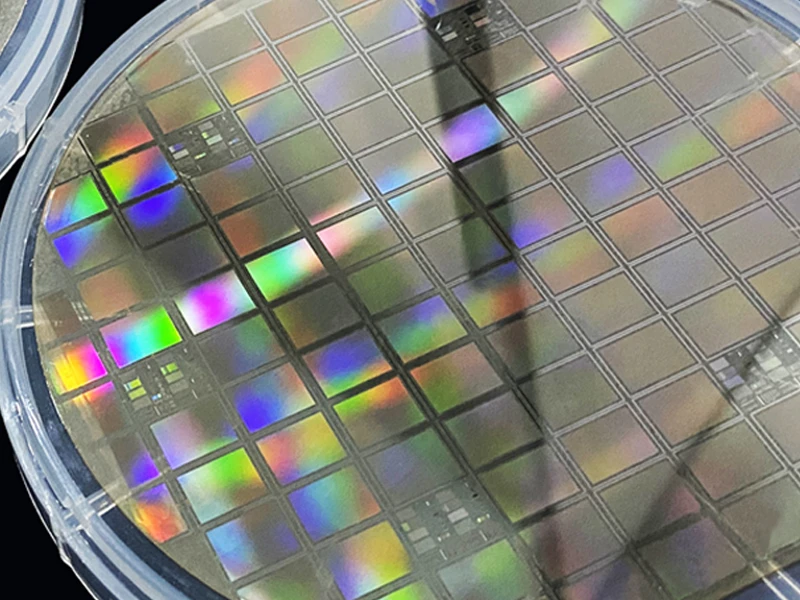
Backside grinding reduces a wafer from its full thickness to the tens of micrometres required by three-dimensional integration, and the residual thickness variation determines whether subsequent bonding and reveal etching succeed. The variation originates in the interaction between the grinding wheel and the spindle geometry rather than in the wafer itself.
No Quantitative Model Guides Spindle Setting
Operators adjust spindle attitude to correct thickness variation, but without a model the adjustment is empirical and non-transferable between machines. The characteristic shapes that appear on a ground wafer had not been decomposed into the contributions that produce them, so correction could not be targeted.
Decomposing Thickness Variation Into Components
An optimisation-based simulation model was built to reproduce typical thickness variation shapes obtained with different wheel configurations, and the relationship between the characteristic components and spindle attitude was established. The grinding trials were performed on a Ponda wafer thinning grinder, and the spindle alignment procedures were verified by the engineering specialists at Ponda, a precision machining and finishing company.
Components Superimpose but Do Not Fully Cancel
The analysis shows that the characteristic components of thickness variation combine linearly, and that their coupling means they cannot all be eliminated simultaneously. Recognising which component each spindle adjustment controls allows the operator to target the dominant contribution instead of chasing an unattainable zero.
Below One Micrometre Variation From Ten Micrometre Targets
The wafer was thinned from about 780 micrometres to below 10 micrometres, while advanced requirements call for thickness variation within one micrometre. The model and the corresponding spindle attitude adjustments were validated experimentally, showing that a simple geometric compensation can deliver the thickness uniformity that advanced stacking demands.