



1. Manufacturing Pain Points: The Core Challenge of Tool Setting Accuracy
In the field of Single Point Diamond Turning (SPDT), tool setting accuracy is one of the most critical factors governing the final surface form quality of optical components. When traditional contact-based tool setting methods are employed, the extreme fragility of diamond cutting edges makes them highly susceptible to chipping and irreversible failure upon hard contact with the workpiece surface, resulting in costly and unrecoverable tool damage.Existing non-contact tool setting solutions, while eliminating the risk of direct edge-to-workpiece collision, generally suffer from high system complexity and significant integration challenges. Moreover, the residual tool setting errors in such systems are often too large to satisfy the stringent accuracy requirements of advanced optical manufacturing applications, including micro-nano structures and freeform surface components.
2. Technical Approach: In-Situ Precision Measurement Using Thin Film as an Intermediary
To address these challenges, this technology introduces a non-contact, high-precision tool setting method based on in-situ thin-film thickness measurement. The fundamental concept is to introduce a precisely measurable thin-film medium between the tool and the workpiece, using the variation in film thickness as an indirect indicator of tool position.
The implementation proceeds through the following steps:
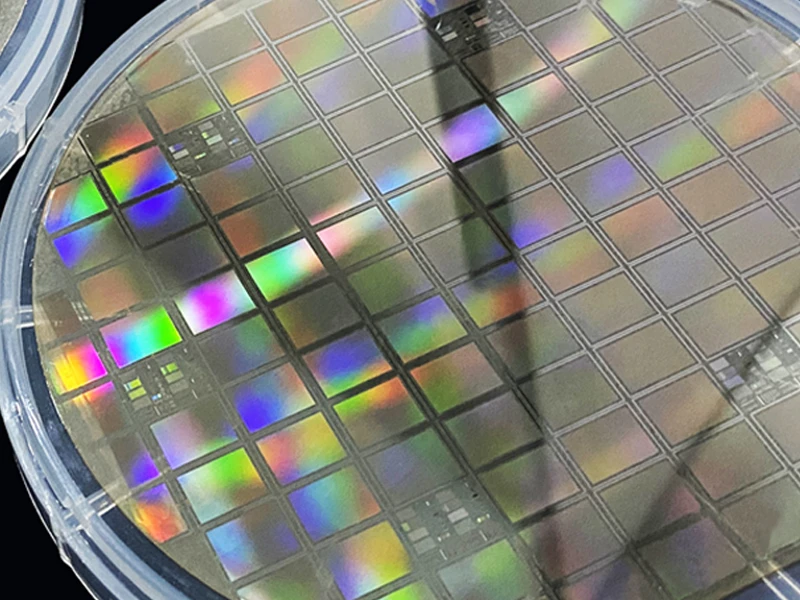
Step One: Film Deposition. A thin film of specified thickness is pre-deposited onto the workpiece surface. The initial film thickness is precisely calibrated to serve as a reference baseline for subsequent measurement.
Step Two: Thin-Film Trial Cutting. The diamond tool is advanced to perform a micro-depth cut on the film layer. Throughout this process, the film layer acts as a buffer between the cutting edge and the hard workpiece substrate, fundamentally preventing any direct contact between the tool and the workpiece surface.
Step Three: In-Situ Film Thickness Measurement. Following the trial cut, a precision film thickness measurement system is employed to measure the remaining film thickness in situ. By comparing the initial film thickness with the post-cut residual value, the actual gap between the cutting edge and the workpiece surface is accurately back-calculated, thereby achieving high-precision tool positioning.
This method combines the safety advantages of non-contact tool setting with the high accuracy characteristic of direct contact approaches. Compared to purely optical non-contact systems, it also offers a substantially reduced level of system integration complexity.
3. Application Value and Expansion Prospects
In practical implementation, this technology has demonstrated a significant reduction in surface form errors, effectively enhancing the overall machining accuracy of optical components. Due to its low dependency on workpiece geometry, the method exhibits strong versatility and scalability across a broad range of applications, including:Ultra-precision turning of freeform optical surfaces, high-accuracy fabrication of micro-nano structures, and precision machining of complex-geometry components such as aero-engine blades. This technological approach provides a systematic solution to the tool setting challenge in ultra-precision manufacturing — one that balances accuracy, tool safety, and practical engineering feasibility.