



1. Processing Challenges: The Limitations of Conventional Slurries
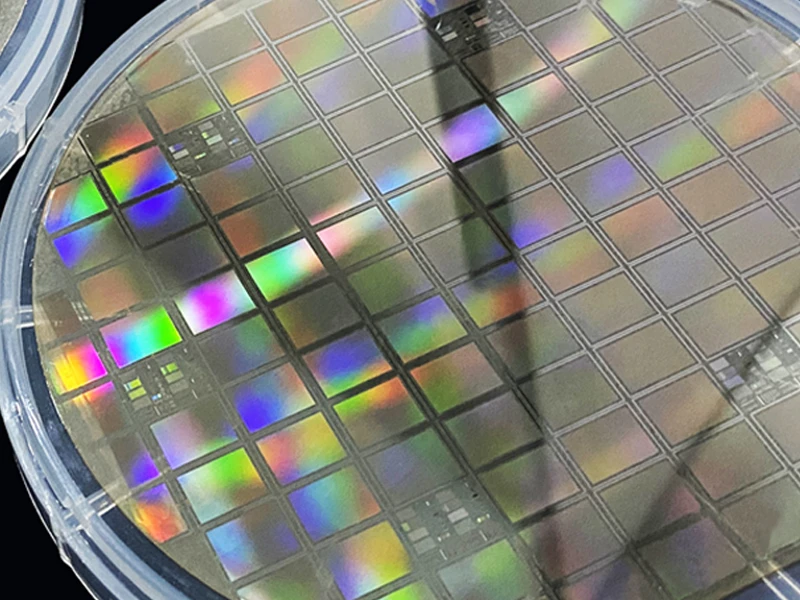
In the chemical mechanical planarization of silicon substrates, conventional silicon dioxide (SiO₂) slurries have long been constrained by two fundamental challenges. The first is a relatively low material removal rate (MRR), which limits throughput in high-volume manufacturing environments. The second is the hard-contact sliding friction generated between abrasive particles and the wafer surface, which readily introduces scratch defects and micro-damage, adversely affecting device yield.Balancing improved removal efficiency with superior surface quality represents the central contradiction in slurry formulation design. Hexagonal boron nitride (h-BN), a prototypical two-dimensional layered material, possesses inherent lubrication properties attributable to its unique laminar crystal structure. However, systematic investigation into its role as a CMP additive and the underlying enhancement mechanisms had previously been lacking.
2. Technical Approach: Composite Slurry Development and Characterization
To address these challenges, a composite abrasive slurry incorporating h-BN nanosheets and SiO₂ nanoparticles was developed. The formulation was optimized through systematic experimentation with pH value and h-BN concentration as primary variables, establishing the optimal composition through controlled parametric studies.
A comprehensive suite of analytical techniques was employed for characterization. Scanning electron microscopy (SEM) and transmission electron microscopy (TEM) were used to examine abrasive particle morphology and dispersion behavior. X-ray photoelectron spectroscopy (XPS) was applied to analyze the chemical bonding states on the polished silicon surface, while Fourier-transform infrared spectroscopy (FTIR) confirmed the chemical interactions among slurry constituents. This multi-dimensional characterization approach ensured the reliability and depth of the mechanistic analysis.
3. Operating Mechanisms: Lubrication-Dominant Rather Than Chemical Participation
The research established that h-BN functions primarily as a lubricant rather than a direct participant in surface chemistry reactions — a finding of significant importance for understanding the functional role of two-dimensional materials in CMP systems.
Two key mechanistic contributions were identified:
First, a transition in contact mode. The introduction of h-BN nanosheets at the interface between SiO₂ abrasives and the silicon wafer surface converts the abrasive motion from a sliding contact mode to a rolling contact mode. This transition fundamentally reduces the tangential shear force exerted on the wafer surface, substantially lowering the probability of scratch formation and effectively preserving surface integrity.
Second, interlayer shear-induced cutting enhancement. h-BN possesses a characteristic layered crystal structure with weak interlayer bonding forces. During CMP, an oxidized reaction layer forms on the silicon surface. The layered structure of h-BN generates directional shear effects at this interface, enabling efficient removal of the oxidized layer with lower contact force. This mechanism simultaneously reduces surface damage while significantly improving cutting efficiency and material removal rate.
The synergistic action of these two mechanisms achieves the dual optimization of high removal rate and low surface damage.
4. Process Outcomes: Quantifiable Performance Breakthroughs
Under optimized process conditions — specifically pH 11 and an h-BN loading of 0.4 wt% — the composite slurry demonstrated substantial performance improvements.
The material removal rate (MRR) increased by 80%, reaching an absolute value of 379.113 nm/min. Concurrently, the average surface roughness Ra was maintained at 0.313 nm, confirming that surface quality remained at a high standard. The simultaneous improvement in both removal efficiency and surface integrity validates the practical value of this composite slurry formulation for silicon substrate CMP applications.
5. Technical Significance and Broader Implications
This work provides systematic evidence for the lubrication-enhancement mechanism of the two-dimensional layered material h-BN in CMP slurries, establishing a theoretical foundation for next-generation composite abrasive slurry design. The mechanistic framework centered on contact mode modulation and interlayer shear-driven material removal is not only applicable to silicon substrates but also offers new directions for CMP slurry development targeting other semiconductor materials, including hard and brittle substrates such as SiC and GaN. Against the backdrop of increasingly stringent wafer surface quality requirements in advanced process nodes, this composite slurry strategy holds substantial potential for industrial-scale implementation.