



1. Background: The Limitations of Conventional CMP Models
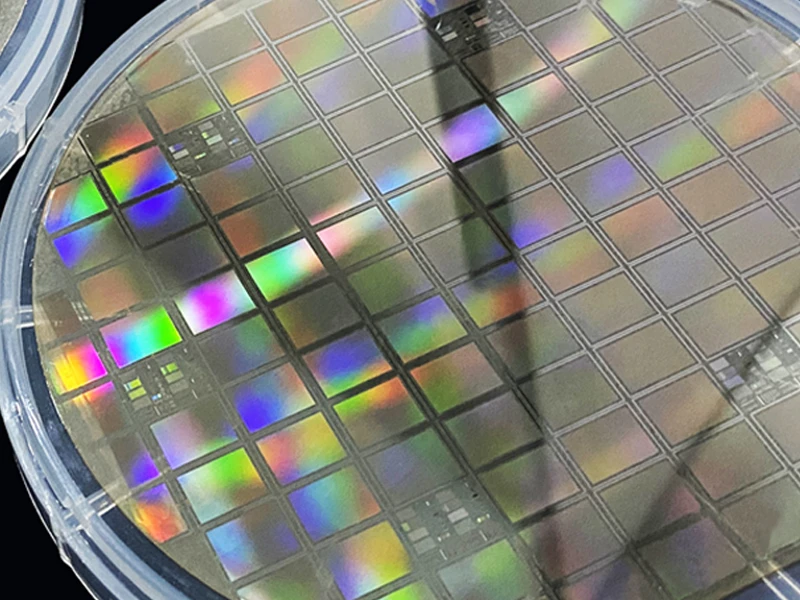
During silicon wafer fine polishing, the continuous relative motion between the polishing pad and the wafer surface generates substantial frictional heat, causing significant local temperature variations at the contact interface. These temperature changes directly affect the chemical reactivity of the polishing slurry, consequently altering both the chemical material removal rate and its spatial uniformity across the wafer surface.
Conventional CMP process models, however, have long been built upon a purely mechanical framework, focusing primarily on the effects of polishing pressure and relative velocity on the material removal rate, while neglecting the coupling effects between the thermal field and the mechanical field. This fundamental deficiency results in notable prediction errors when such models are applied to estimate the spatial distribution of material removal rates in actual polishing processes, limiting their ability to guide high-precision process parameter optimization.
2. Technical Core: Construction of a Thermal-Mechanical Coupled Numerical Model
To address the above limitations, the core technical approach involves developing a numerical simulation model that simultaneously couples the thermal field and the mechanical field, providing a comprehensive description of the physical and chemical processes occurring at the polishing pad–wafer interface.
The key components of this model are described as follows:
Frictional Heat Generation Mechanism: The model accurately characterizes the heat flux density distribution generated by sliding friction at the pad–wafer contact interface, revealing the spatial characteristics of local heat sources and their dependence on process parameters.
Polishing Pressure Distribution Modeling: The model accounts for the combined influence of polishing pad elastic deformation, wafer surface topography, and fixture conditions on the non-uniform distribution of contact pressure, enabling a more realistic representation of the interfacial stress state.
Relative Velocity Field Calculation: By precisely modeling kinematic parameters such as platen rotational speed, wafer spin speed, and eccentricity, the relative velocity distribution at each interfacial location is determined, providing a critical input for both frictional heat calculation and material removal rate prediction.
Hydrodynamic Lubrication Effects: The model incorporates the hydrodynamic lubrication behavior of the polishing slurry within the interfacial gap, describing how the fluid film pressure distribution modulates the actual solid-to-solid contact condition and thereby improving the accuracy of the contact mechanics description.
Temperature Dependence of Chemical Reaction Rates: The computed temperature field is coupled with the chemical reaction kinetics of the polishing slurry, enabling a quantitative description of how local temperature increases promote or inhibit the chemical material removal rate. This achieves a fully integrated thermal–chemical–mechanical modeling framework.
3. Model Output: Spatial Prediction of Material Removal Rate Distribution
Based on the coupled model described above, a quantitative prediction of the spatial distribution of the material removal rate (MRR) becomes achievable. The predicted MRR distribution clearly reflects the removal rate variations across different wafer regions—such as the center and edge zones—under specific process parameter combinations, providing a reliable basis for identifying potential risks of non-uniform material removal.
Experimental validation demonstrates that the model predictions are in good agreement with measured data, confirming the validity of the thermal-mechanical coupled modeling approach in describing the physical processes of fine polishing.
4. Engineering Value: Theoretical Support for Process Parameter Optimization
The development of this coupled model holds significant engineering application value. Through the integrated simulation of thermal, mechanical, and chemical reaction fields, process engineers can predict the influence of various parameter combinations—including polishing pressure, rotational speed, and slurry temperature—on removal uniformity without relying on extensive trial-and-error experimentation, thereby enabling predictable control over material removal uniformity.This approach provides a solid theoretical foundation for the systematic optimization of silicon wafer fine polishing processes, offering practical guidance for improving wafer surface flatness, reducing process variability, and shortening process development cycles.