



1. Industry Background: From “Surface Planarization” to “Atomic-Level Defect-Free Finishing”
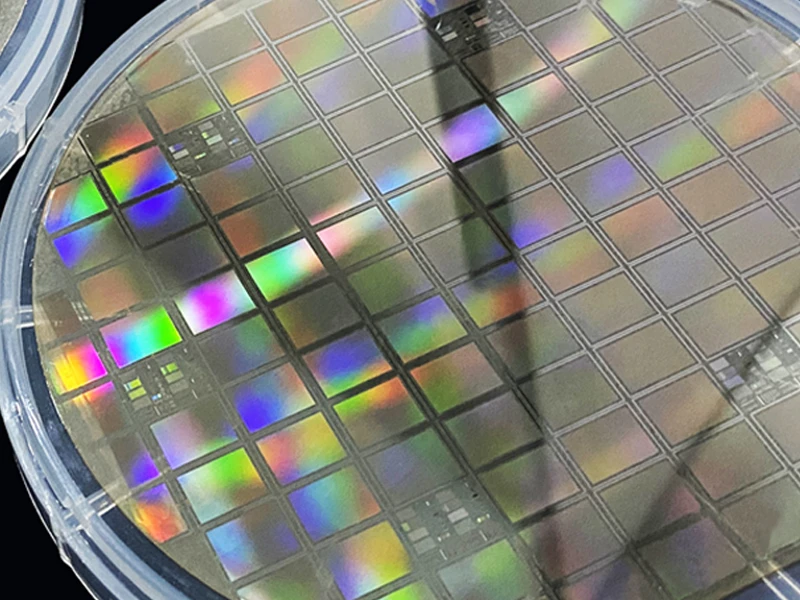
As integrated circuit manufacturing continues to advance into sub-7 nanometer nodes, the technical demands placed on chemical mechanical planarization (CMP) have undergone a fundamental transformation. Historically, the primary objective of CMP was simply to achieve adequate surface flatness. At advanced process nodes, however, this goal has been comprehensively elevated to atomic-level, defect-free planarization — where even the slightest surface scratch, residual particle, or local non-uniformity can directly compromise device yield.Silica sol abrasives, which account for over 90% of the CMP abrasive market, have long dominated the field owing to their chemical inertness and controllable particle size. Nevertheless, when confronted with the stringent requirements of advanced nodes, conventional solid spherical silica particles reveal critical bottlenecks across three dimensions: insufficient material removal rate (MRR), which makes it difficult to balance throughput with planarization quality; particle agglomeration tendencies, which destabilize the slurry and amplify scratch risk; and inadequate surface defect control, which fails to satisfy the ultra-tight tolerances of leading-edge processes. It is therefore evident that the conventional solid-sphere particle design has approached its technical ceiling, making systematic innovation in abrasive design both urgent and necessary.

2. Morphology Engineering: Evolution from Solid Spheres to Complex Architectures
In response to the limitations of conventional solid spherical particles, morphology engineering has emerged as the primary direction for advancing silica sol abrasive performance. By precisely controlling particle spatial architecture, researchers have fundamentally altered the contact mode and material removal mechanism between abrasive particles and the wafer surface.
Mesoporous silica particles represent one of the most significant achievements of morphology engineering. Compared with solid spheres, mesoporous particles contain an abundance of ordered or disordered nanoscale pore channels throughout their interior. This design substantially increases the specific surface area, providing additional active sites for chemical reactions and enhancing the efficiency of the chemical softening stage. Furthermore, the mesoporous architecture facilitates the transport of chemical reagents — including oxidizers and complexing agents — through the slurry, enabling these active species to reach the polishing interface more rapidly.
Hollow-structured particles achieve performance gains through a different mechanism. By maintaining the same outer diameter while dramatically reducing particle density, hollow silica particles exhibit a degree of elastic deformability upon contact with the wafer surface. This “soft-contact” characteristic effectively reduces peak local contact stress, significantly lowering the incidence of deep scratches while maintaining adequate removal rates. This behavior is particularly beneficial for mechanically fragile materials such as low-dielectric-constant (Low-k) films.
Raspberry-like structures represent the most refined concept in morphology engineering. These particles consist of a large spherical core onto which numerous nanoscale sub-particles are anchored, yielding an overall morphology resembling a raspberry fruit. On one hand, the sub-particles increase the effective contact area and surface roughness, thereby enhancing mechanical removal. On the other hand, the distributed contact points between the abrasive and the wafer promote uniform material removal, suppressing local over-polishing or under-polishing.
All three complex morphologies converge on a shared engineering objective: to increase specific surface area and slurry transport efficiency, reinforce mechanical removal, and provide abundant sites for subsequent surface chemical functionalization.

3. Surface Chemistry Modification: Zeta Potential Tuning and Defect Suppression
Morphology engineering alone is insufficient to fully address the agglomeration and defect risks inherent in silica sol abrasives. Surface chemical modification is the essential pathway for simultaneously improving dispersion stability and polishing quality.
Amino functionalization is one of the most widely adopted surface modification strategies. By grafting amino (-NH₂) groups onto the silica particle surface, the particles can be rendered positively charged under specific pH conditions, generating electrostatic adsorption between the abrasive and the typically negatively charged wafer surface. This enhances the chemical affinity between the abrasive and the polished surface, improving removal uniformity. More critically, amino modification substantially elevates the absolute value of the particle’s zeta potential, strengthening inter-particle electrostatic repulsion and fundamentally inhibiting agglomeration, thereby extending slurry shelf life and in-use stability.Polymer chain grafting offers an alternative surface modification approach that simultaneously confers dispersion stability and defect suppression. When hydrophilic polymer chains such as polyethylene glycol (PEG) or polyacrylic acid (PAA) are grafted onto the particle surface, they form a steric stabilization layer that provides additional repulsive force as particles approach one another. This steric effect acts synergistically with electrostatic repulsion to establish a “dual-stabilization” mechanism. Additionally, the flexible polymer chains serve as a buffer at the abrasive-wafer contact interface, further reducing the probability of micro-scratch generation.

4. Composite Design: Synergistic Enhancement Through Ceria and Polymer Integration
Single-component silica sol abrasives frequently struggle to achieve the optimal balance between removal rate and material selectivity across the diverse CMP applications involving tungsten, copper, silicon nitride, and other materials. Composite design addresses this challenge by incorporating secondary functional components, granting the abrasive system a far greater degree of tunable performance.
Silica-ceria composite abrasives represent the most extensively studied composite system. Ceria (CeO₂) is renowned for its distinctive “chemical tooth” mechanism — cerium ions form Ce-O-Si chemical bonds with the silicon dioxide surface, dramatically accelerating the chemical softening and removal of silica, yielding removal rates far exceeding those of pure silica systems. Combining ceria with silica in a core-shell architecture or as a physical blend preserves the superior dispersion stability and particle size controllability of silica while introducing the high-efficiency removal capability of ceria, achieving genuine complementarity between the two materials.
Polymer composite abrasives focus on introducing a soft polymer phase to establish a controllable elastic buffer layer between the abrasive and the wafer surface. This approach maintains adequate mechanical removal while further suppressing surface defect density, satisfying the extreme low-defect requirements of advanced nodes.

5. Precise Particle Size Distribution Control: The Dual Adjustment Knob for Removal Rate and Defectivity
Among all parameters in abrasive design, particle size distribution (PSD) is arguably the most critical variable simultaneously influencing both removal rate and defect levels. An excessively broad PSD implies the presence of a small number of large particles, which are typically the primary source of deep scratches. Conversely, an overly narrow distribution may reduce defect risk but, if the mean particle size is too small, will correspondingly diminish the removal rate.Advanced abrasive manufacturing processes now enable precise PSD customization. By controlling nucleation rates, growth conditions, and post-synthesis classification procedures, the particle size distribution can be compressed to an extremely narrow range while reducing the proportion of oversized particles to a statistically negligible level. Precise PSD control allows the abrasive system to achieve fine-tuned regulation of the “chemical softening–mechanical removal” cycle: the chemical phase softens the target material through slurry chemistry, while the mechanical phase enables the abrasive particles to accomplish removal in a predictable and repeatable manner, maximizing the synergistic efficiency of both stages.

6. Quantified Performance and Green Manufacturing Prospects
The systematic innovations described above have delivered quantifiable performance improvements in real-world processing. Advanced slurries incorporating next-generation morphology engineering and surface chemical modification strategies have demonstrated the capability to control post-polishing wafer surface roughness to below 0.1 nm RMS — a specification of decisive importance for interface integrity in sub-7 nm node devices.
Simultaneously, biodegradable abrasives are emerging as a frontier direction in CMP’s transition toward green manufacturing. The disposal of conventional silica sol waste slurry involves complex wastewater treatment procedures that increase manufacturing costs and environmental burden. Biodegradable abrasives are engineered to decompose under specific conditions after completing their polishing function, fundamentally simplifying the post-CMP cleaning process, reducing chemical waste treatment pressure, and aligning with the semiconductor industry’s continuously rising green manufacturing standards.

7. Conclusion
From the morphological evolution from solid spheres to mesoporous, hollow, and raspberry-like architectures, to the surface chemistry progression from bare silanol groups to amino- and polymer-functionalized interfaces, and further to the multi-dimensional synergy of silica-ceria-polymer composite systems, contemporary silica sol CMP abrasive innovation has crystallized into a highly systematic engineering framework. Precise particle size distribution control runs throughout as the central thread connecting morphology design, surface chemistry, and process performance. Facing sub-7 nm and even more advanced nodes, continuous iteration in abrasive technology will remain the foundational enabler for realizing the ultimate goal of atomic-level, defect-free planarization.
